
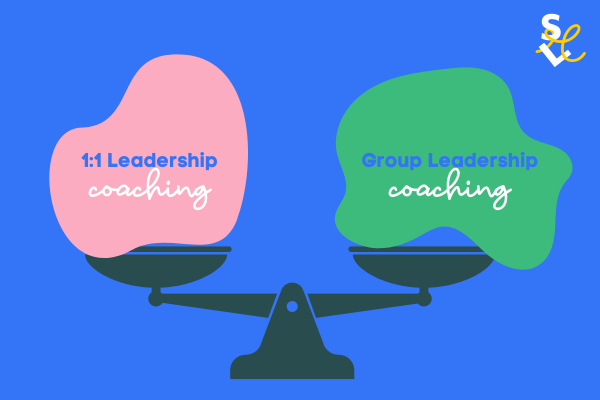
Let’s compare 1:1 & Group Leadership Coaching
So, you’ve made the excellent decision that you want to experience the power of coaching to support your professional, and personal growth but you’re just not sure whether 1:1 or group coaching is best for you.
It can sometimes be hard to decide which option would suit you best and to make that decision even harder, both have huge, transformational benefits! Let’s take a look at the logistics of both approaches, explore their unique advantages and look at how they cater to different needs and preferences.
Your Time
With 1:1 coaching, you will receive highly personalised attention and support tailored to your specific goals, challenges and aspirations at a time that suits you. With your own direct link to my calendar, you are in control of when the sessions happen, how often and even how long they last for. These sessions can start right now!
I’m sure you know how hard it can be to get a group of school leaders to find a common time, so with group coaching, the number, time, duration and dates of sessions have usually already been decided. This may depend on whether you’ve joined a group of leaders from a range of schools or whether the group consists of colleagues from the same school or group. This means that group sessions will only be running at certain times of the year, not necessarily when you want to start.
Your Space
While both group and 1:1 coaching sessions are highly confidential spaces built on openness and trust, some school leaders feel more comfortable in a 1:1 setting. This allows you the freedom to discuss sensitive topics, explore vulnerabilities and address personal and professional concerns.
On the other hand, group coaching brings together leaders from varied backgrounds, contexts and with different experiences. This diversity fosters a rich exchange of ideas and perspectives. You can learn with and from others, gain fresh insights and broaden your understanding of leadership challenges and their many possible solutions.
Your Support
In 1:1 coaching, the highly flexible nature of the process can easily be shaped to best suit your unique circumstances, style, needs and pace. This allows for a bespoke experience, ensuring that each session addresses your specific challenges, goals and aspirations. Our time together is yours and can be dedicated to whatever you need in that moment.
What group coaching does really well is facilitate collaborative learning rather than focus on individual needs. Using the theory of Action Learning Sets, you’ll engage in discussions, share experiences and promote collective problem-solving which stimulates creativity and innovation. The level of peer support that you gain through group coaching provides an excellent opportunity to build professional networks and establish supportive connections with other leaders.
A little something extra
For the group coaching programmes and some of the 1:1 coaching packages, I like to throw in some extra exercises to promote self-reflection and learning between sessions. These may form the basis of our initial discussions in a series of group coaching sessions but are also useful to lead us off in different directions. There’s also the option to add 1:1 sessions during or after a group series.
So, what’s it to be?
The choice between 1:1 coaching and group coaching really depends on your individual preferences and circumstances. Maybe you’d benefit from the bespoke attention of 1:1 coaching, or perhaps you’d thrive in the collaborative and diverse learning environment of group coaching. Whatever you choose, both approaches provide valuable opportunities to enhance leadership skills, gain new perspectives and achieve transformative growth.


0 Comments